
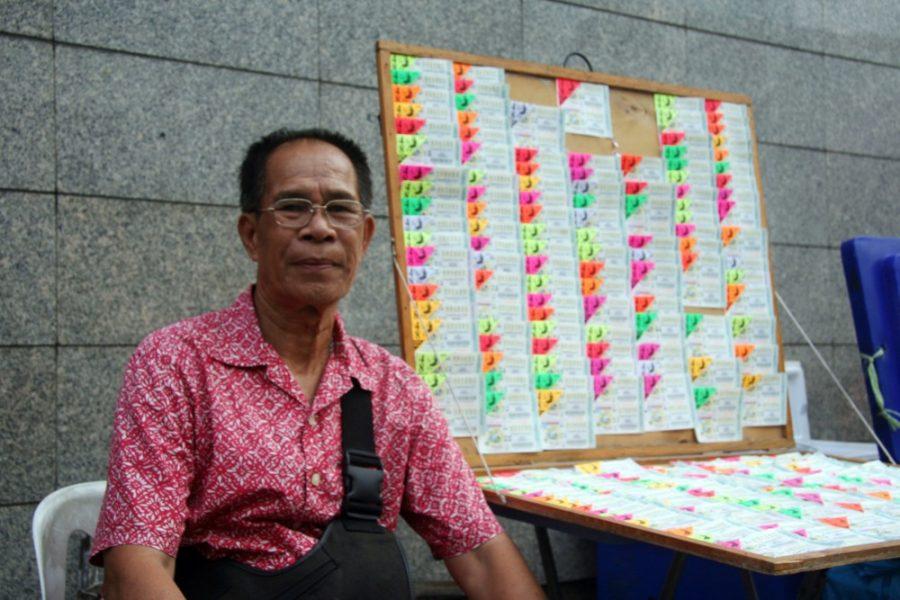
BANGKOK, Thailand — Siripong Khwanthong sidles up to a lottery seller along a crowded street near Bangkok’s Patpong pleasure district, studies the selection and settles on a ticket ending in 37. “The number just came to me,” he says. “Maybe I’ll be lucky tomorrow.”
If the government has its way, Siripong soon will be buying lottery tickets from machines. And that’s fine with him: Not only would it be more convenient, but it also could save money by cutting out the surcharge that street vendors command selling “lucky” numbers, which can add as much as 50 percent to the $2.70 ticket price.
But Nipon Sasananand, a 67-year-old with a sprained wrist selling Siripong the ticket from a portable wooden case, strongly opposes the idea. “The machines would be cheaper for customers, so they might not buy from us and we could lose our jobs,” he says. “I’m afraid.”
The state argues that the machines would reduce overcharging by street vendors and increase state revenue by expanding the market for lower-priced tickets and reducing illegal gambling. Critics counter that it will weaken family values and undermine the social order.
The government lottery board hopes that hundreds, perhaps thousands, of machines will start disgorging tickets on the street and in shops by January.
Although street vendors sell official lottery tickets, a parallel network of illegal brokers markets illegal lottery tickets. By some estimates, Thais spend $10 billion annually on illegal gambling, much of it in huay tai din, or underground lottery houses.
Chuvit Kamolvisit, a lawmaker and former massage parlor mogul who recently exposed seven illegal casinos on his Facebook page, said Thailand has been slow to approve lottery machines because many corrupt politicians and criminals worry that a more competitive state lottery will eat into their illegal lottery operations.
But the gambling operations have little to fear, says Rattaphong Sonsuphap with Chulalongkorn University’s Center for Gambling Studies. “Online lotteries will not reduce the size of the illegal lottery nor solve the problem of overpriced tickets.”
Activist groups for the disabled also oppose the idea, concerned that many of their members who sell tickets on the street could be pushed out of business.
Others opposed to the machines, including teachers and members of the Family Network Foundation, say the proposal could lead children to mistake the machines for video games, spurring addiction.
“It’s not a positive thing, with more lotteries creating a worse situation for the country,” says K. Than, a religion professor at Bangkok’s Mahidol University. “It makes people expect to make money without working. Simple people end up sitting idle and dreaming.”